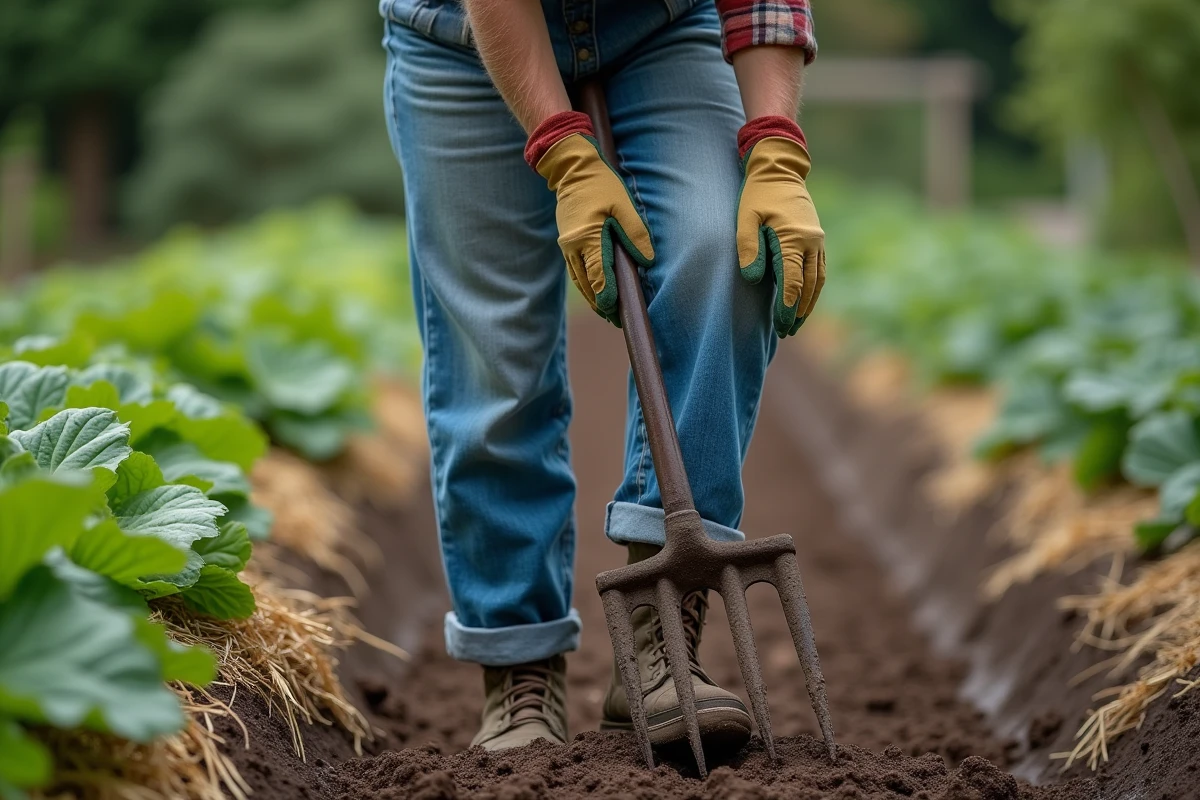
The grelinette is not chosen based on the number of tines. It is selected based on the nature of the soil, the slope of the terrain, and the geometry of the planting beds. Too many guides focus on generic criteria (weight, price, width) without addressing the real constraints of an ecological vegetable garden in production.
Grelinette on sloped terrain: adapting the tool to the topography
On a vegetable garden set up on terraces or steep slopes, a standard grelinette becomes a problem. The straight handles and the classic width of four or five tines cause lateral imbalance as soon as the incline exceeds a few degrees. The gardener compensates by forcing on one arm, which negates the ergonomic benefit of the tool.
In this case, we recommend a model with a maximum of three tines, with slightly flared handles. The reduced width allows for working perpendicular to the slope without the tool slipping downhill. On sloped clay soil, curved tines grip better than straight tines, as they penetrate at an angle and hold the clod instead of pushing it down.
The other adjustment concerns the length of the handles. Height-adjustable handles allow for compensating for the elevation change by extending the handle on the uphill side. Senior gardeners find an additional benefit: a field study conducted by INRAE in 2025 showed that models with adjustable handles reduced lumbar strain by about 30% during prolonged sessions.
Detailed comparative sheets are available on grelinette-warrior.com to identify models compatible with use on slopes.
Recycled steel or new hardened steel: what impact on lifespan
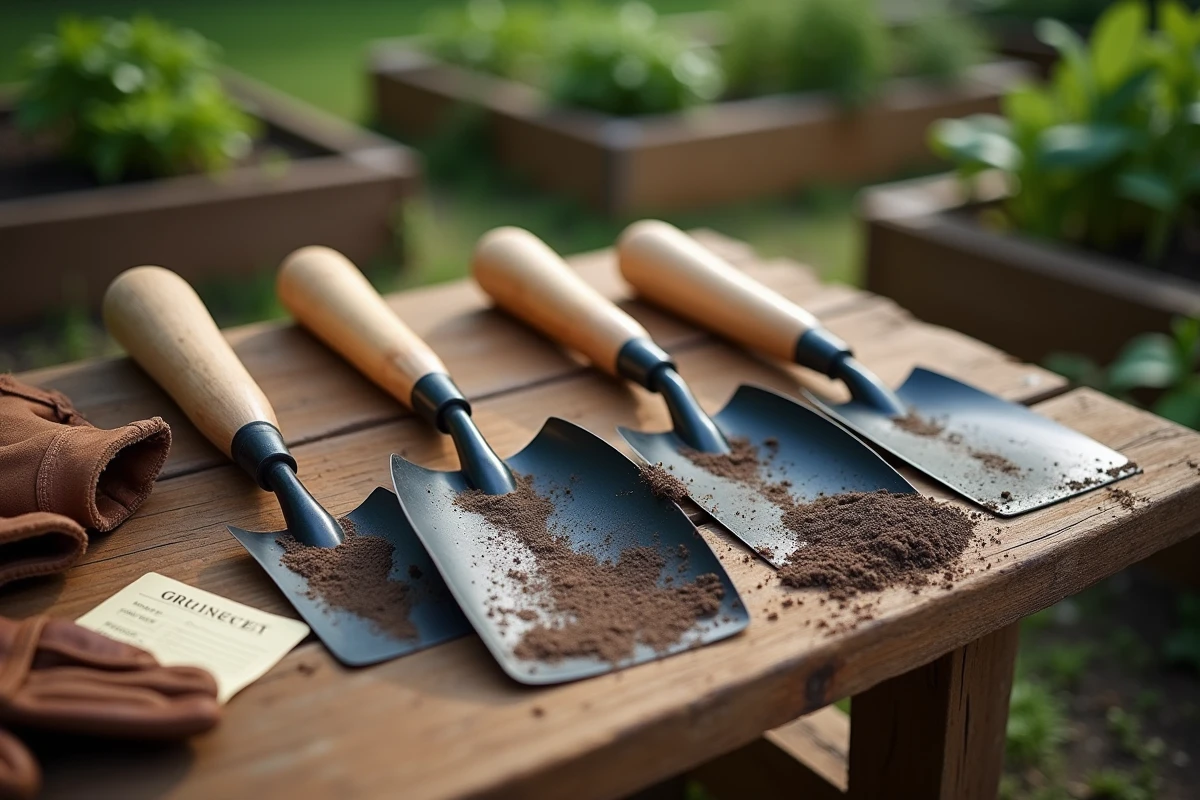
The material of the tines determines the longevity of the tool much more than the brand or country of manufacture. According to comparative tests from the Sustainable Tools Observatory published in February 2026, grelinettes made from recycled steel have a lifespan approximately 20% longer than new models in wet conditions. The reason is metallurgical: recycled steel, remelted and re-hardened, has a more homogeneous crystalline structure that resists corrosion better.
In practice, this means that a vegetable garden located in a high rainfall area or with heavy, moist soil will benefit more from a model made of recycled steel. The additional cost at purchase is low, and the lack of need for replacing tines over several seasons more than compensates.
Check the hardening, not the label
Poor quality hardened steel can be recognized by use: the tines bend after a few sessions on rocky soil. Before purchasing, we suggest checking two concrete points:
- The Rockwell hardness (HRC) of the tines, which should be above 50 HRC for use in compact soil. Serious manufacturers indicate this on the technical sheet.
- The type of welding between the tine and the crossbar. A visible and regular MIG weld is a good indicator. Assemblies by simple fitting or riveting tend to fail more quickly under lateral stress.
- The warranty on the tines, distinct from the warranty on the handles. A warranty of five years or more on the tines indicates the manufacturer’s confidence in their hardening.
Tine geometry and soil structure in the vegetable garden
The choice between straight tines and curved tines depends exclusively on the soil texture. On sandy or loamy soil, straight tines are sufficient. They penetrate easily and loosen without excessive effort. On clay soil, curved tines exert a lever effect that lifts compact clods without turning them over, thus preserving the biological layering of the soil.
This point is central to an ecological vegetable garden. Turning the soil deeply destroys the fungal and bacterial life of the surface layers. The grelinette is an aeration tool, not a plow, and the choice of tine curvature enhances or weakens this function depending on the soil.
Working depth and root development of vegetables
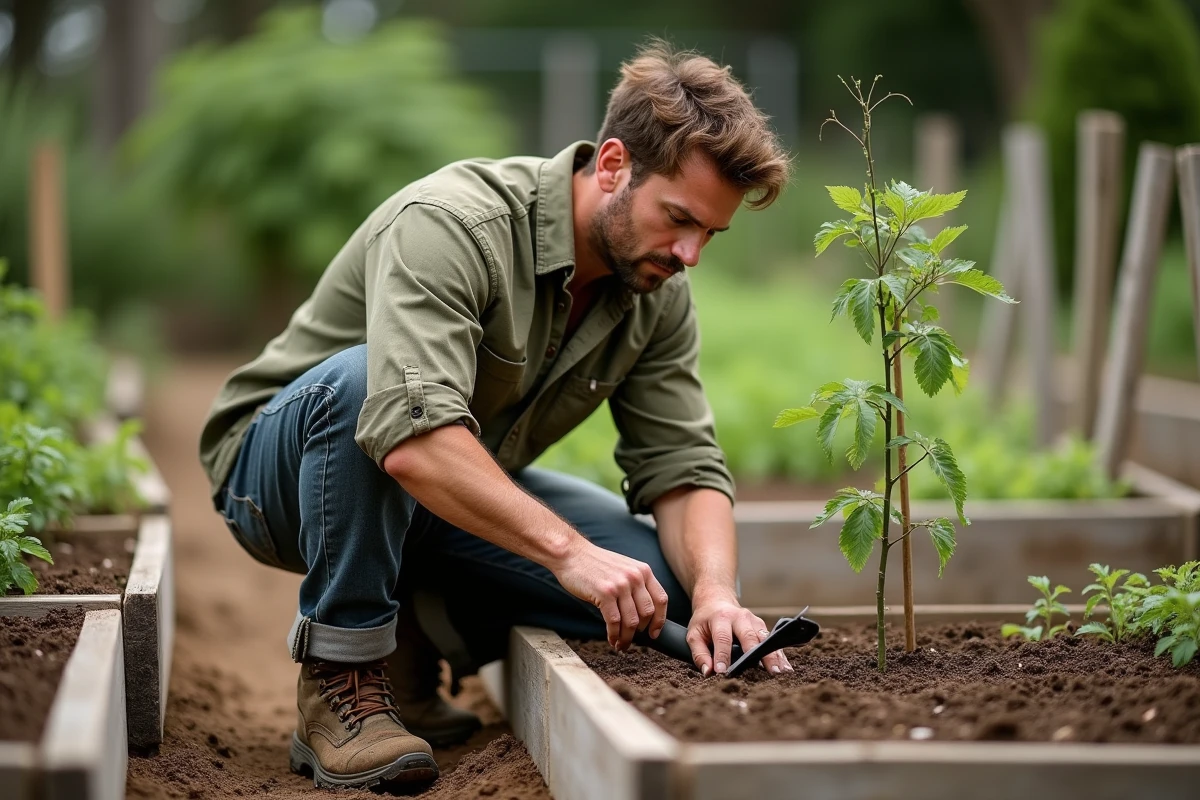
The standard depth of a grelinette is around 25 cm, which is suitable for most vegetable crops. For long-rooted vegetables (parsnips, long carrots, salsify), some models offer tines of 30 cm or more. However, excessive depth on minimally worked soil creates a compaction layer beneath the loosened area, which is counterproductive in the medium term.
We observe that permaculture gardeners often prefer to work at only 15 to 20 cm, compensating with a thick mulch that promotes downward biological activity. In this case, a model with short, wide tines loosens more quickly at a shallow depth.
Grelinette and seasonal maintenance: what wears out the tool
Wear on a grelinette rarely comes from the tines themselves. The weak points are the handles (cracks at the junction) and the welds on the crossbar. After each session, a simple brushing of the tines and storage in a dry place can extend the lifespan by several seasons.
Wooden handles (ash, beech) absorb vibrations better than fiberglass handles, but they break more cleanly in the event of a violent lateral shock. On rocky soil, composite fiber handles offer the best compromise between comfort and durability.
- Oil the wooden handles twice a year (linseed oil) to prevent splinters and drying cracks.
- Check the play at the junction at the start of each season. A handle that moves creates a torsional force that fatigues the weld.
- Sharpen the tips of the tines slightly once a year to maintain penetration on hardened soil.
Choosing a grelinette suited to the terrain and soil remains the determining factor for a productive vegetable garden in the long term. A well-sized model, made of properly hardened steel, with adjustable handles, makes each work session more efficient and protects the living structure of the soil that the gardener seeks to preserve.