
Flights to Corsica regularly display fares that are higher than those of comparable Mediterranean destinations. Despite the presence of low-cost airlines on Corsican routes, ticket prices do not decrease sustainably. Several structural mechanisms, related to both the air market and public policies, explain this price resistance.
Public service obligation and subsidies on Corsican routes
Corsica benefits from a territorial continuity regime that imposes public service obligations (PSO) on certain routes connecting the island to the mainland. This system guarantees a minimum number of frequencies and a capped fare for Corsican residents, but it relies on public subsidies paid to the operating airlines.
This system has a paradoxical effect on competition. Airlines operating under PSO receive financial compensation to maintain regulated fares. Other airlines, including low-cost ones, do not have access to these subsidies and set their prices freely. The market is segmented between subsidized routes and open routes, with competitive pressure not spreading from one segment to another.
Finding a discounted or low-cost flight to Corsica is still possible, but the fares offered by these airlines rarely drop to the levels observed on other European islands served from France.
Flight prices to Corsica based on departure airports
Price differences vary significantly depending on the departure city and the Corsican airport of arrival. Routes departing from Paris concentrate the majority of the offer, which should theoretically favor lower fares. Regional airports, on the other hand, suffer from a limited offer that drives prices up.
| Departure Airport | Served Corsican Airports | Observed Price Level | Number of Airlines |
|---|---|---|---|
| Paris (Orly, CDG) | Ajaccio, Bastia, Figari, Calvi | Medium to high | Air France, Air Corsica, easyJet, Transavia, Volotea |
| Toulouse | Ajaccio, Bastia, Figari | High | Volotea, Air Corsica |
| Montpellier | Ajaccio, Bastia | Medium to high | Volotea |
| Rennes | Bastia | High | Air Corsica |
| Caen | Figari | Very high | Very limited offer |

On routes with low competition, one or two airlines share the service. The fewer the airlines on a route, the higher the average fare increases. Airports like Figari, popular for southern Corsica, illustrate this phenomenon: strong tourist demand in summer meets constrained airport capacity.
Yield management and seasonal reduction of low-cost offers
Low-cost airlines apply aggressive yield management on Corsican flights. Prices rise very quickly as the load factor increases, sometimes several weeks before departure. This mechanism is common across the airline industry, but it produces amplified effects on an island destination where seat supply remains limited.
A less visible phenomenon worsens the situation. Some low-cost airlines reduce or cancel frequencies during the season when the expected load does not justify operation. This reduction in supply creates an artificial shortage of seats that keeps fares high on the remaining flights.
Flight cancellations by Transavia and Volotea to Corsica have been documented several times. These schedule adjustments deprive travelers of the low-cost alternative they were counting on, pushing them towards traditional airlines with higher fares.
Why the low-cost model does not fully work in Corsica
The low-cost model relies on a high volume of passengers and quick rotations. However, Corsica faces several constraints that limit this model:
- The capacity of Corsican airports (notably Figari and Calvi) is restricted by infrastructure designed for moderate traffic, which caps the number of daily rotations.
- Marked seasonality concentrates demand over a few summer months, making it difficult to make year-round routes profitable.
- Demand remains relatively inelastic in peak season: travelers accept high fares due to the lack of quick land alternatives to an island.
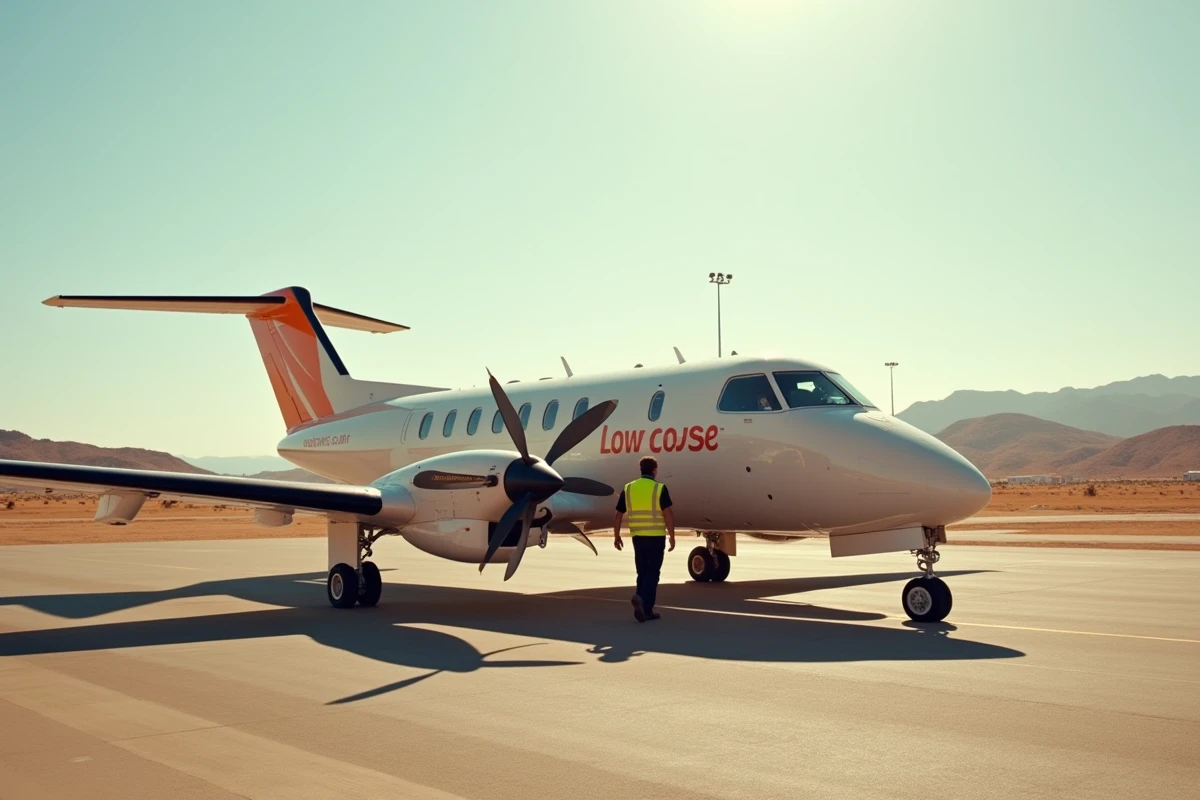
EasyJet had attempted to establish itself on Corsican routes with low introductory fares. This volume-price strategy has been abandoned, confirming that the structural constraints of the Corsican market prevent the low-cost model from producing the fare reductions observed on other destinations.
Public subsidies: a necessary condition for lowering flight prices to Corsica
Territorial continuity costs the Corsican community several tens of millions of euros per year. These funds are used to compensate airlines that accept public service obligations, notably the capping of resident fares.
Without subsidies, no airline spontaneously offers a moderate fare on Corsican routes. The resident fare itself has seen recent increases, a sign that the public system struggles to contain rising operating costs (fuel, airport taxes, maintenance).
The Corsican community has also implemented targeted aid to stimulate tourism outside the high season. Reduced fares in the low season aim to smooth attendance and make the island accessible outside July-August. This policy implicitly acknowledges that high summer prices result from a commercial strategy of the airlines, not a technical inevitability.
Aviation market structurally different from other European islands
Corsica differs from the Balearics or the Canaries in the size of its airports, passenger volume, and the French regulatory framework. In the Balearics, dozens of airlines operate from all over Europe at high-capacity airports, creating real competitive pressure on fares.
In Corsica, the limited number of available slots, combined with a territorial continuity framework that segments the market, prevents this mechanism from functioning. Competition remains insufficient to force a sustainable decrease in fares without public intervention.
The price of airline tickets to Corsica therefore depends less on the presence or absence of low-cost airlines than on the ability of public authorities to fund regulatory pricing mechanisms. As long as infrastructure constraints and seasonality persist, subsidies will remain the main lever for price moderation on this destination.