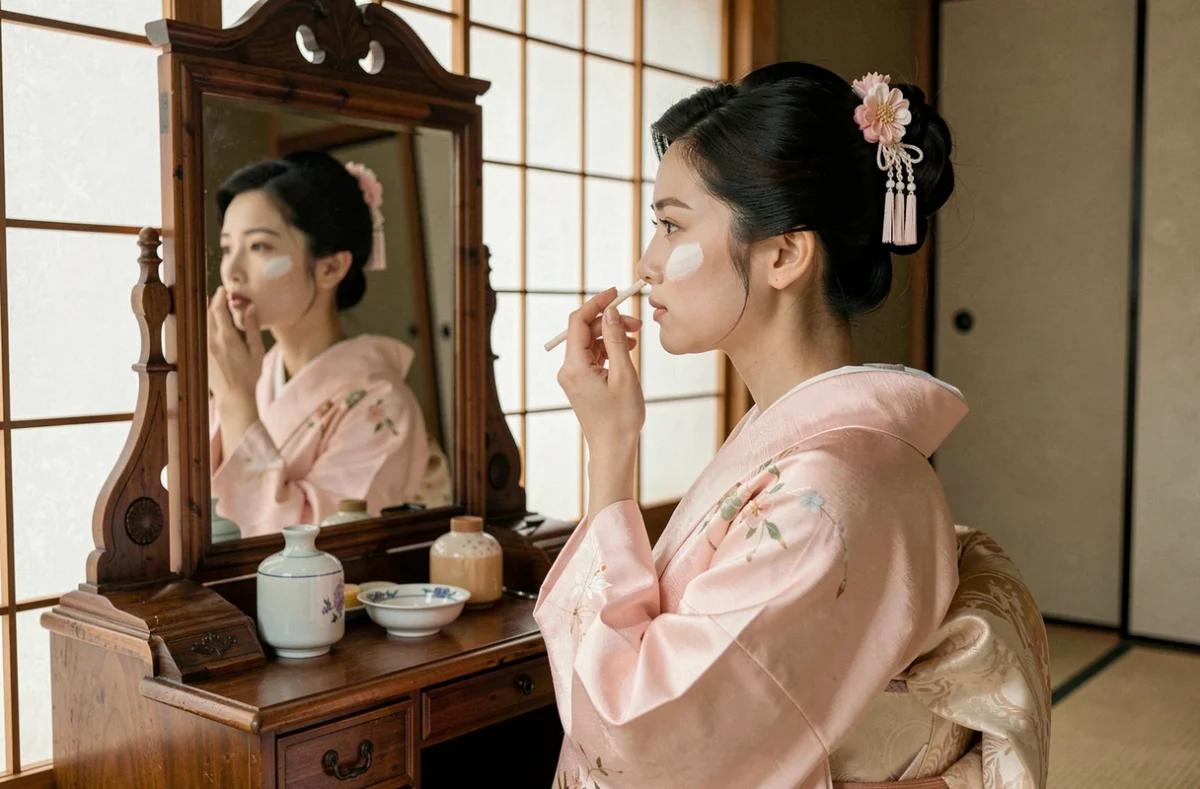
The standards of Japanese beauty are based on an ancient philosophical foundation, but their concrete translation in the stores of Tokyo or Osaka is evolving rapidly. Clear and luminous skin remains a central marker, summarized by the concept of bihaku. Measuring what changes and what persists allows us to understand why Japanese beauty fascinates as much as it transforms.
Cosmetic Imports in Japan: K-beauty Surpassing France
The most telling fact to grasp the transformation of the Japanese market is a commercial reversal. K-beauty has surpassed French cosmetics in Japanese imports at the beginning of 2024. This shift reflects a growing preference for functional products, launched quickly, supported by an aggressive digital presence.
The Korean model focuses on targeted active ingredients (niacinamide, CICA, PDRN) and short launch cycles. The historically dominant French model relies more on brand image and traditional formulations. The table below summarizes the gaps between these two approaches in the Japanese market.
| Criterion | K-beauty (Korea) | J-beauty / French cosmetics |
|---|---|---|
| Launch Rhythm | Very fast, frequent seasonal collections | Slower, stable ranges |
| Main Channel | Social media, e-commerce | Department stores, pharmacies |
| Key Actives | Niacinamide, CICA, PDRN | Retinol, hyaluronic acid, botanical extracts |
| Price Positioning | Entry and mid-range | Mid and high-end |
| Priority Target | Gen Z, young professionals | Women aged 30-50 |
This table does not mean that French cosmetics are disappearing from Japan, but that competition is intensifying in the most dynamic segment: young urban consumers in Tokyo and major cities.
Seibun-kai and the Composition of Japanese Beauty Products
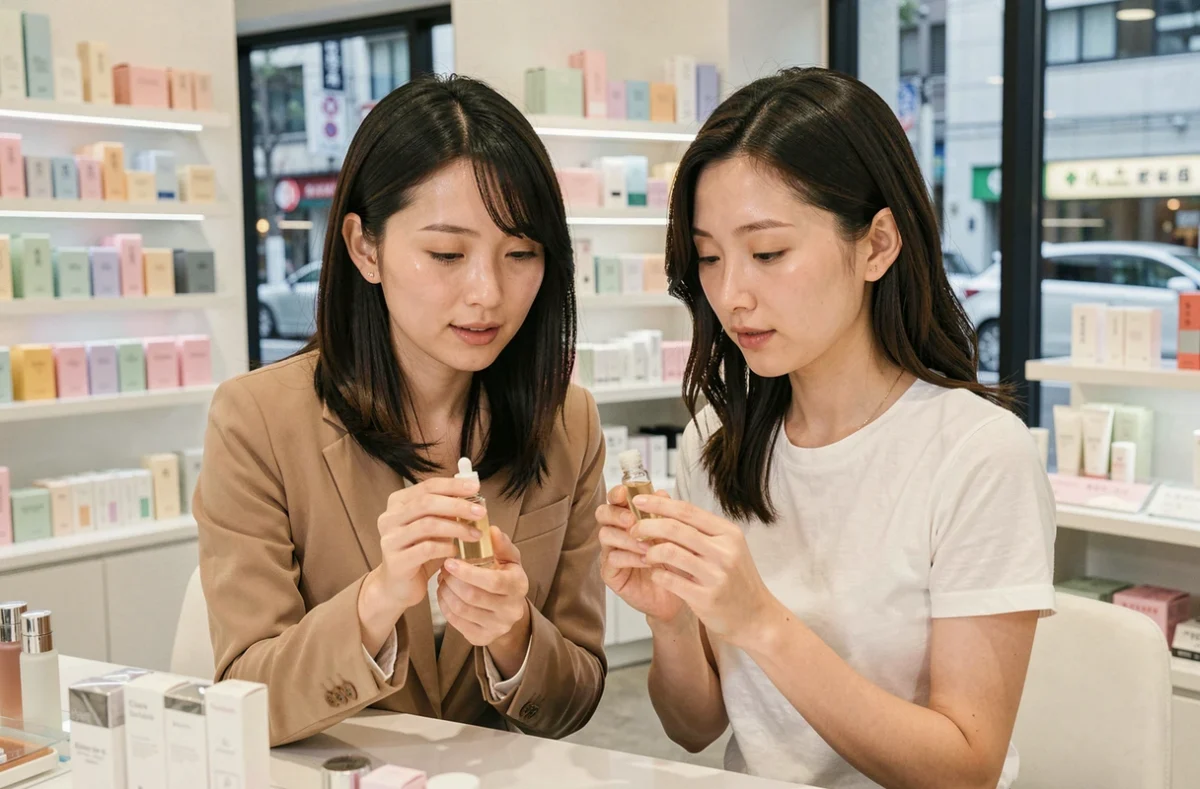
A fundamental trend is redefining how Japanese consumers choose their skincare. The term seibun-kai refers to a shift towards beauty based on ingredients and measurable efficacy. In concrete terms, a brand’s reputation weighs less than the INCI list on the packaging.
To better understand the beauty criteria on Secret de Beauté, one must grasp this shift: in Japan, consumers scrutinize the composition before looking at the logo. This demand pushes manufacturers to communicate about each active ingredient, with efficacy data to support it.
The most sought-after ingredients in today’s Japanese market reflect this logic:
- Niacinamide, valued for its effects on radiance and pores, occupies a central place in facial care sold in Tokyo
- CICA (centella asiatica) meets a demand for skin repair, driven by sensitive skin exposed to the humid climate
- PDRN (polydeoxyribonucleic acid) is gaining ground as a regenerating active, first popularized in Korea and then adopted in Japan
This seibun-kai phenomenon is not just a passing trend. It restructures the shelves of Japanese drugstores and modifies purchasing criteria even for traditional products.
New Beauty Audiences in Japan: Men and Teenagers
The standards of Japanese beauty no longer concern only adult women. According to data from Kao, there has been a 17% increase between 2017 and 2021 in the number of teenagers and men in their twenties buying cosmetics. This figure challenges a historically female segmentation.
Japanese men in their twenties are investing in daily skincare, sun products, and subtle makeup (BB cream, concealer). This evolution goes beyond mere hygiene: it reflects a normalization of male beauty in Japanese society.
For teenagers, the influence of social media and kawaii culture plays a crucial role. Skincare routines begin earlier, often as early as middle school, with entry-level products available in konbini (convenience stores) in every city.
Clean Beauty in Japan: Claims Without Regulatory Framework
Sustainability and naturalness are expanding selling points in the country. However, “clean” and “free from” claims remain legally fragile in Japan. The country does not have a unified regulatory definition of clean beauty or natural cosmetics.
This lack of framework has concrete consequences:
- A product can claim to be “natural” without meeting a minimum threshold of plant-derived ingredients
- The claims “paraben-free” or “silicone-free” have no normative value regulated by Japanese law
- The most informed consumers are turning to foreign certifications (Ecocert, COSMOS) as a trusted benchmark
This regulatory ambiguity creates a gap between the image conveyed by brands and the reality of formulations. Travelers discovering Japanese beauty products during a trip to Tokyo or traditional onsen should keep this nuance in mind.
Fragrance, the Latest Mutation of Japanese Beauty Rituals
Niche perfumery, both Japanese and foreign, is gaining visibility in the shopping districts of Tokyo. Fragrance has shifted from a discreet gesture to a claimed beauty gesture among young Japanese.
This evolution illustrates how Japanese beauty standards are not fixed: they absorb external influences while filtering them through a local sensitivity, where subtlety is preferred over ostentation.
The ongoing mutations, from seibun-kai to the broadening of audiences, are not just temporary adjustments but structural transformations in the Japanese relationship with beauty.