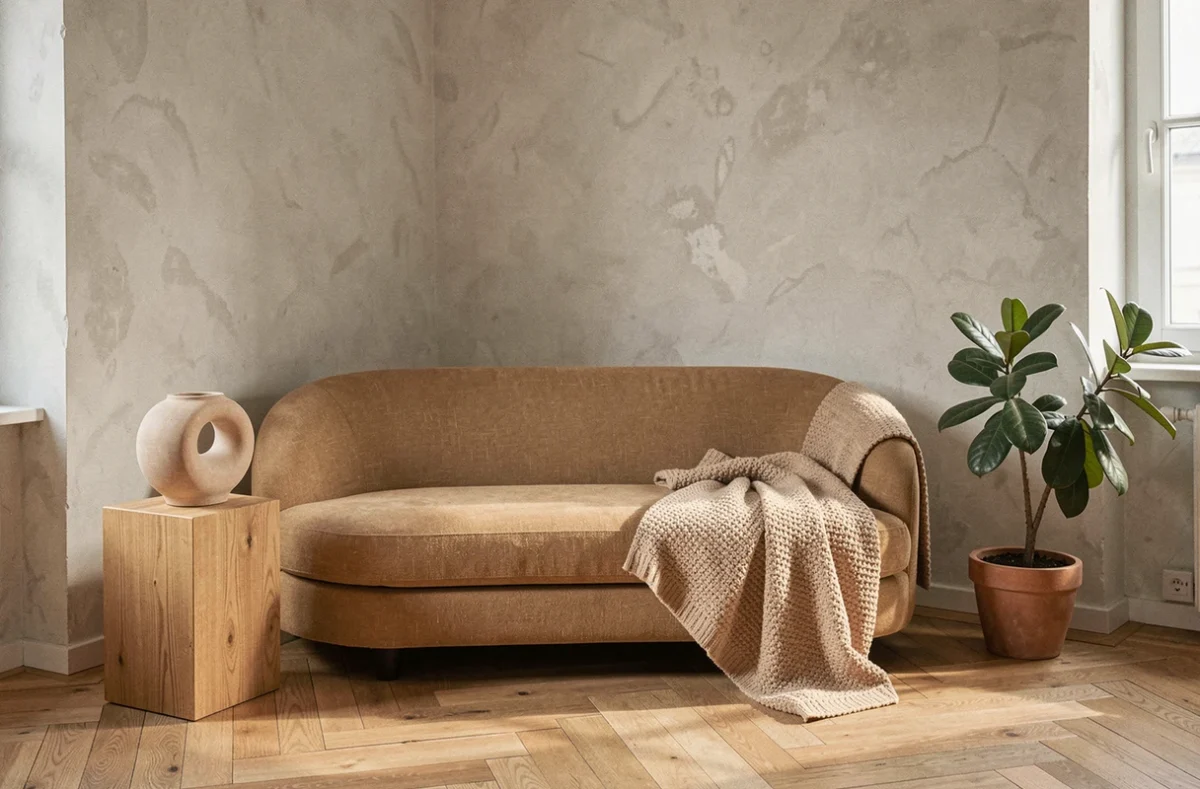
Home trends are no longer just about choosing between two shades of terracotta or replacing a sofa. In 2026, the home universe is transforming under the combined effect of new energy regulations, rethought materials, and a different relationship with indoor comfort. Here’s an overview of the changes that are concretely altering the way we live, renovate, and decorate.
Energy Renovation: The New MaPrimeRénov’ Rules Redefine Priorities
Are you planning to insulate your attic or install a wood stove with financial assistance? Since September 1, 2026, the MaPrimeRénov’ “by gesture” pathway has been significantly tightened. Insulation, ventilation, thermodynamic water heaters, solar thermal, and wood heating are no longer funded alone. Only heat pumps, connection to a heat network, removal of an oil tank, and energy audits remain primarily funded, under certain conditions.
This tightening pushes towards extensive renovation. For individual houses, accompanying files must now include several insulation works, aim for a gain of at least two energy performance certificate (DPE) classes, and no longer retain a system using fossil fuels at the end of the project. In practical terms, keeping a gas boiler after the work becomes incompatible with the aid scheme.
This regulatory shift has a direct effect on equipment choices. Before thinking about wall colors or living room layouts, many homeowners must first decide between an air-water heat pump and network connection, then size the insulation accordingly. Decoration comes afterward, adapting to technical constraints (location of units, double-flow ventilation, thickness of insulation).
To keep up with these developments month by month, the news from the Maisons et Conseils site details each regulatory change and its practical consequences.
Energy Decency and DPE: What Changes for Landlords
The energy decency timeline has become a major decision factor. Landlords renting a property classified F or G on the DPE can no longer ignore the deadline: an energetically indecent property is gradually becoming unlettable.
This constraint modifies renovation priorities. Instead of refreshing a kitchen or renovating a bathroom to enhance a rental property, landlords are directing their budget towards thermal envelopes and heating systems. The consequence on the housing market is visible: artisans specializing in insulation and heat pumps have busier order books than kitchen or tiling specialists.
For an owner-occupier, the logic differs. The DPE remains a useful indicator for prioritizing works, but the regulatory pressure is lower. The stakes are more about daily thermal comfort and managing energy bills.
Biosourced Materials and Interior Design: The Convergence Taking Shape
Why separate thermal performance and aesthetics? Biosourced materials allow for both. Wood fiber for interior insulation, for example, offers superior thermal lag compared to polystyrene while creating a warmer atmosphere once covered with a clay or lime plaster.
Raw earth plaster is becoming a full-fledged wall covering in living spaces. Its irregular texture, natural shades (ochre, sand, light gray), and ability to regulate humidity make it a coherent choice for a living room or bedroom. It advantageously replaces classic paint in interiors seeking visual depth without resorting to wallpaper.
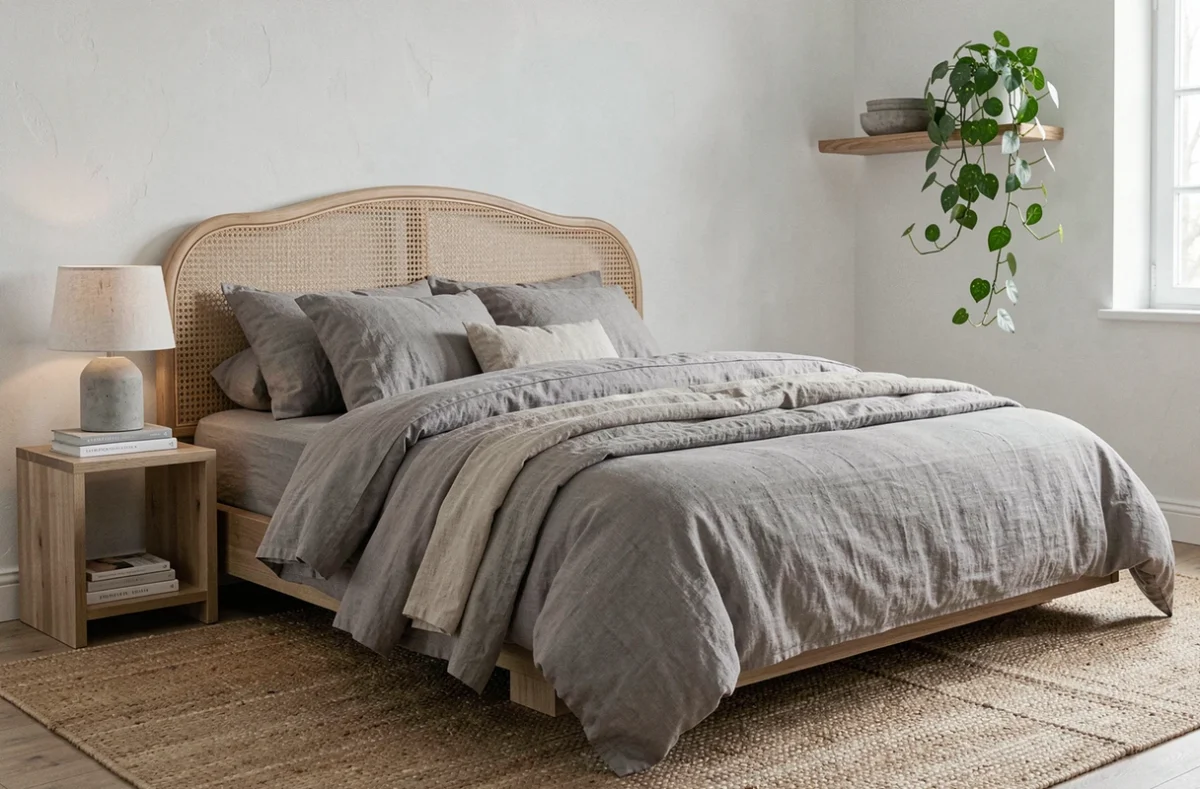
On the furniture side, locally sourced solid wood is making a strong comeback. French oak, beech, or ash are replacing exotic woods in tables, shelves, and kitchen countertops. The trend is not limited to aesthetic choice: it also responds to a demand for traceability regarding the origin of materials.
Three Materials to Watch for Interior Decoration
- Woven linen from France, used for curtains, cushions, and chair upholstery, provides a matte texture and distinctive touch that contrasts with synthetic fabrics
- Recycled terrazzo, made from marble and glass scraps, is now used as a sink countertop in bathrooms or as a backsplash in kitchens
- Thin cladding stone (less than two centimeters thick) dresses an accent wall without overloading the supporting structure, with a mineral finish that is difficult to replicate with paint
Kitchen and Bathroom: Technical Spaces Dictate Style
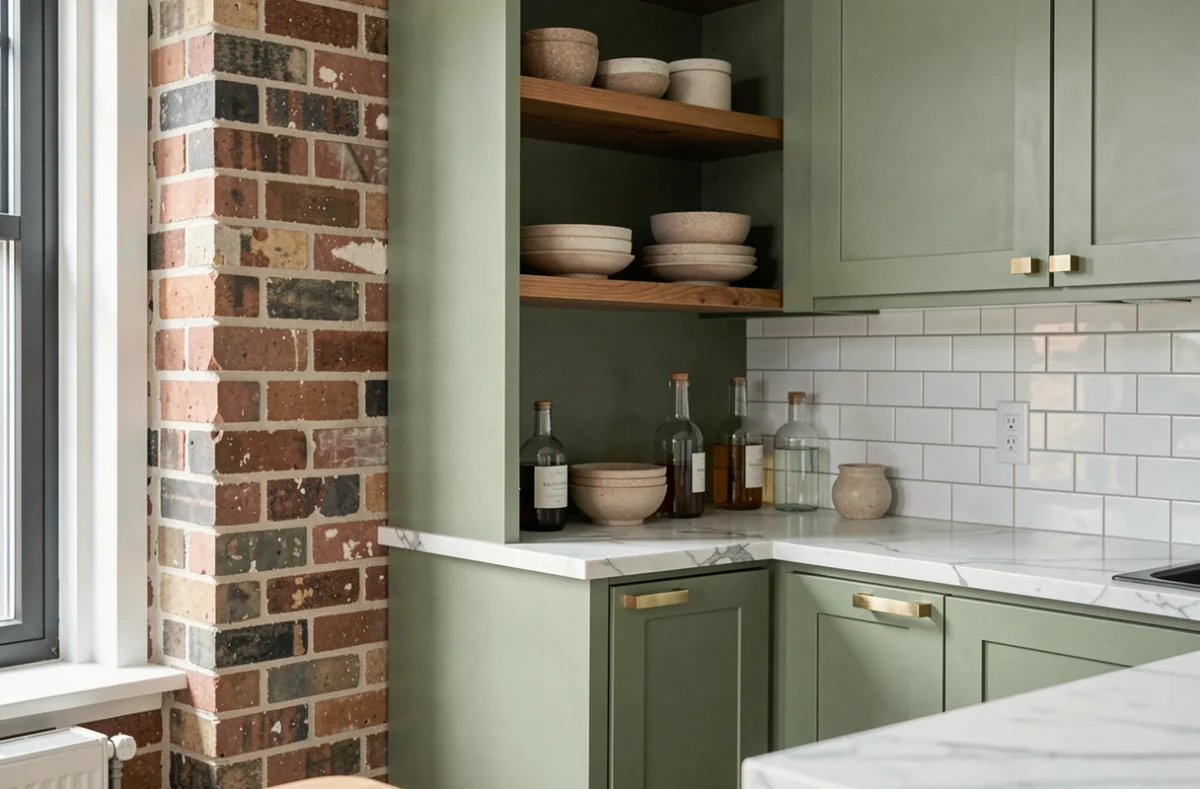
The kitchen remains the room where trends are most quickly observed. In 2026, matte facades in muted tones are replacing glossy white that has dominated for a decade. Sage green, blue-gray, rosy beige: these colors better match the wooden or terrazzo countertops mentioned earlier.
Built-in and quiet appliances are gaining ground, not for fashion reasons, but because the open kitchen to the living room imposes acoustic constraints. A dishwasher with a reduced noise level truly changes the comfort of an open living space.
In the bathroom, the Italian shower is no longer a novelty, but its execution is evolving. Extra-flat mineral resin shower trays allow for wider formats without raising the floor. The wall-mounted faucet frees up space on the sink and simplifies cleaning, a practical detail that weighs as much as the visual aspect.
What Distinguishes a Sustainable Choice from a Trend
A good guideline: if the chosen material or finish solves a concrete problem (acoustics, maintenance, thermal regulation), the trend is likely to last. If the choice is based solely on a color seen on social media, it will probably be replaced in two seasons.
The home trends of 2026 share a common thread: technical performance increasingly guides aesthetic decisions. A raw earth plaster is not only beautiful; it regulates humidity. A heat pump is not just mandatory; it frees up the space previously occupied by a boiler. Each choice of decoration or renovation benefits from being evaluated through this dual lens of visible comfort and measurable benefit.