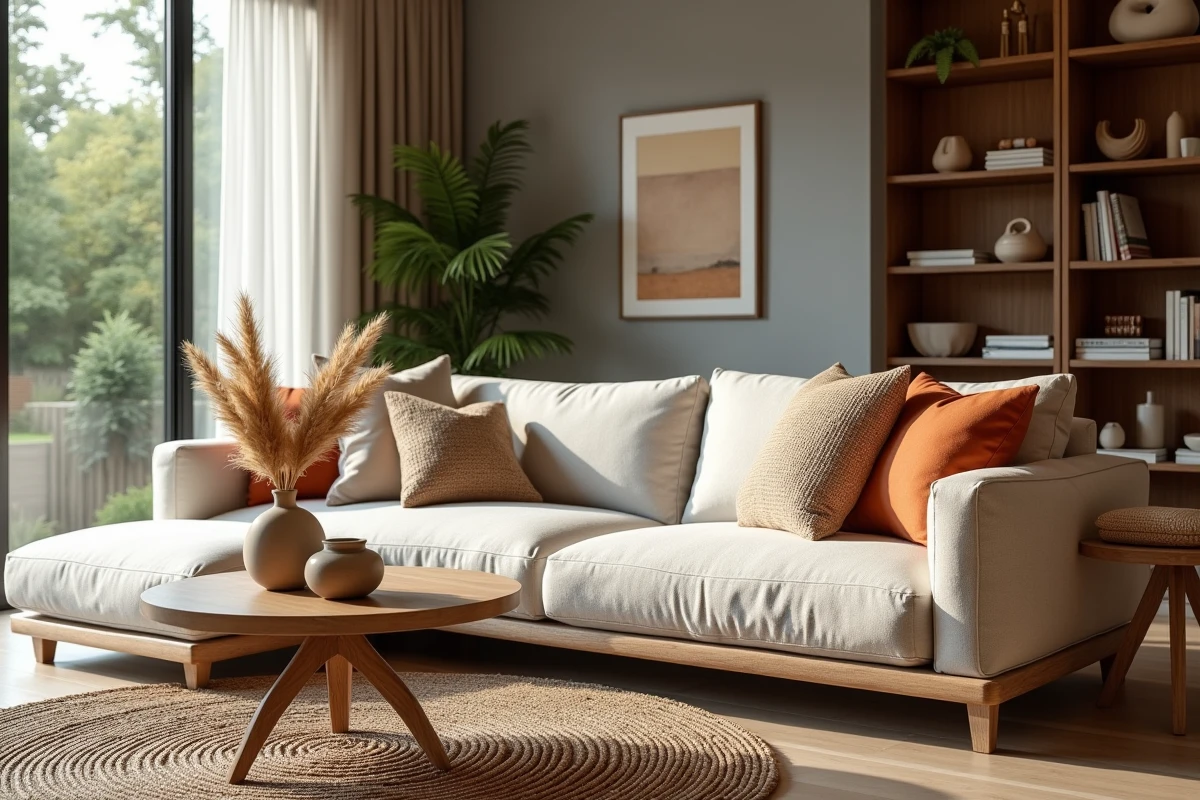
A solid oak floor installed in the living room can enhance a room, but if it releases volatile organic compounds due to cheap varnish, it degrades the air quality we breathe for eight hours a night. Every interior design decision activates several levers simultaneously: aesthetics, thermal comfort, health, safety, and energy consumption. Treating these dimensions separately exposes one to costly corrections afterward.
Interior decoration materials: what we really commit to by choosing them
When selecting a floor covering, wall finish, or upholstery textile, we arbitrate between at least three simultaneous constraints. A porcelain stoneware tile, for example, has high thermal inertia: it stores heat in winter if the floor is well insulated but remains icy in a poorly heated room. The same tile is also the best ally for home safety because it does not propagate flames.
Low-VOC (volatile organic compounds) paints are no longer a niche product. They now cover most of the color charts available in large stores. Choosing low-emission paint protects indoor air quality without sacrificing color rendering, whether aiming for a calming off-white for the bedroom or a deep blue in the living room.
On the Youpi La Maison website, you can find concrete ideas for navigating these trade-offs, from furniture selection to wall finishes.
Solid wood remains a classic in interior design, but feedback varies on this point: some species (untreated raw pine) require regular maintenance to keep their appearance, while others (oiled oak) age without intervention. In terms of energy performance, a wooden floor on joists with integrated insulation significantly outperforms a floor glued directly to a concrete slab.

Colors and natural light: the impact on well-being and energy consumption
The choice of colors in a living space is not just a matter of taste. Light shades on the walls reflect more natural light, reducing the need for artificial lighting during the day. In a north-facing room with a single window, a warm white or ivory wall can transform the atmosphere from a dark space to one where the lamp can be turned off as soon as morning arrives.
Cool colors promote concentration in an office, while warm tones (terracotta, ochre) create a cozy feeling suitable for the bedroom or living room. This is not abstract decoration: it is a concrete lever for daily well-being, documented by studies on quality of life in housing.
Multiplying light sources rather than forcing intensity
A single high-intensity ceiling light creates harsh shadow zones and strains the eyes. Better visual comfort is achieved with multiple low-power light points: a reading lamp near the sofa, under-cabinet lighting in the kitchen, an indirect LED strip behind a shelf.
This approach also serves safety, especially in a family home or one adapted for seniors. Orientation lighting in hallways and staircases reduces the risk of nighttime falls without turning the house into an airport terminal. Motion detectors coupled with low-energy LEDs fulfill this role without increasing the bill.
Room layout: circulation, safety, and thermal comfort on the same level
The placement of furniture determines how air circulates in a room, ease of movement, and the feeling of space. A sofa pressed against a radiator blocks heat distribution and forces the thermostat to rise. Shifting the furniture a few centimeters improves heating efficiency without any investment.
- Clearing main pathways (entrance to kitchen, bedroom to bathroom) to at least the width of a wheelchair ensures safety and accessibility, even without immediate need.
- Positioning tall furniture (bookshelves, cabinets) against load-bearing walls and not in front of windows preserves natural light and ventilation.
- Creating a quiet retreat area, even tiny (an armchair, a plant, a low visual barrier), offers a decompression space in open-plan living areas like kitchen-living rooms.
A layout designed in terms of air flow and movement makes the space more pleasant to live in than any decorative accessory added afterward.
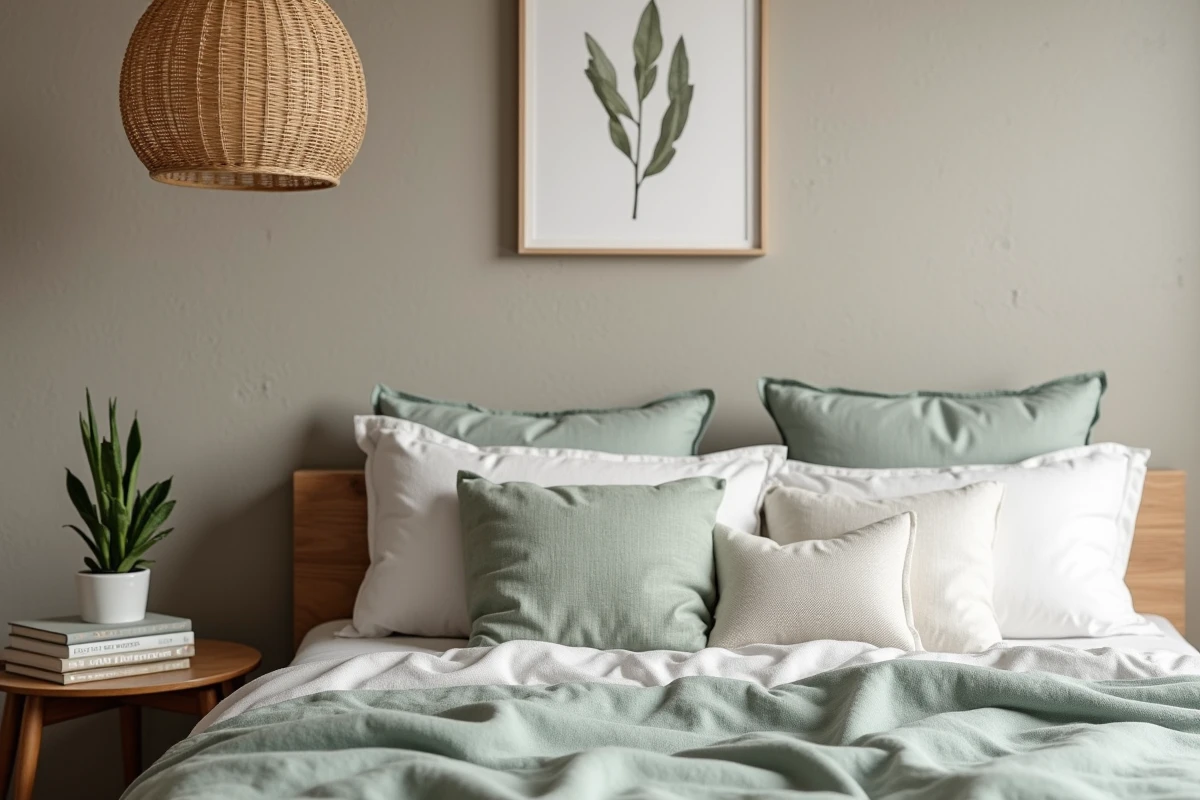
Home automation and security integrated into interior decoration
Security installations suffer from a utilitarian image that often excludes them from decorative considerations. A smoke detector is installed on the ceiling without considering its visual integration, then hidden behind a false ceiling that reduces its effectiveness.
Detection home automation (opening sensors, discreet cameras, connected plugs with automatic shut-off) can now blend into the design of an interior. The housings come in neutral colors, motion sensors integrate into wall sconces, and secured plug sockets with flaps can be installed without modifying the electrical plan.
Greening for health without creating maintenance constraints
The presence of indoor plants helps regulate ambient humidity and limit visual clutter by creating natural focal points. Some species (pothos, sansevieria) tolerate low light conditions and require only infrequent watering.
Placing a large plant next to a technical piece of furniture (internet box, charging station) visually masks the equipment while bringing a living element to the space. This combines aesthetics, well-being, and functional storage in one gesture.
- Favor pots made of natural materials (terracotta, wicker) that contribute to the decorative vocabulary of the room rather than mismatched plastic pots.
- Avoid toxic plants (dieffenbachia, philodendron) in areas accessible to children or pets.
- Group plants near sources of natural light to limit rotation and simplify watering.
Every choice of material, color, or furniture activates several levers simultaneously. A successful interior is not measured by the number of trends adopted but by the coherence between what we see, what we feel, and what we consume in energy. Starting from the strongest constraint of each room (orientation, passage, noise, humidity) allows for a solid foundation before adding the final decorative touch.