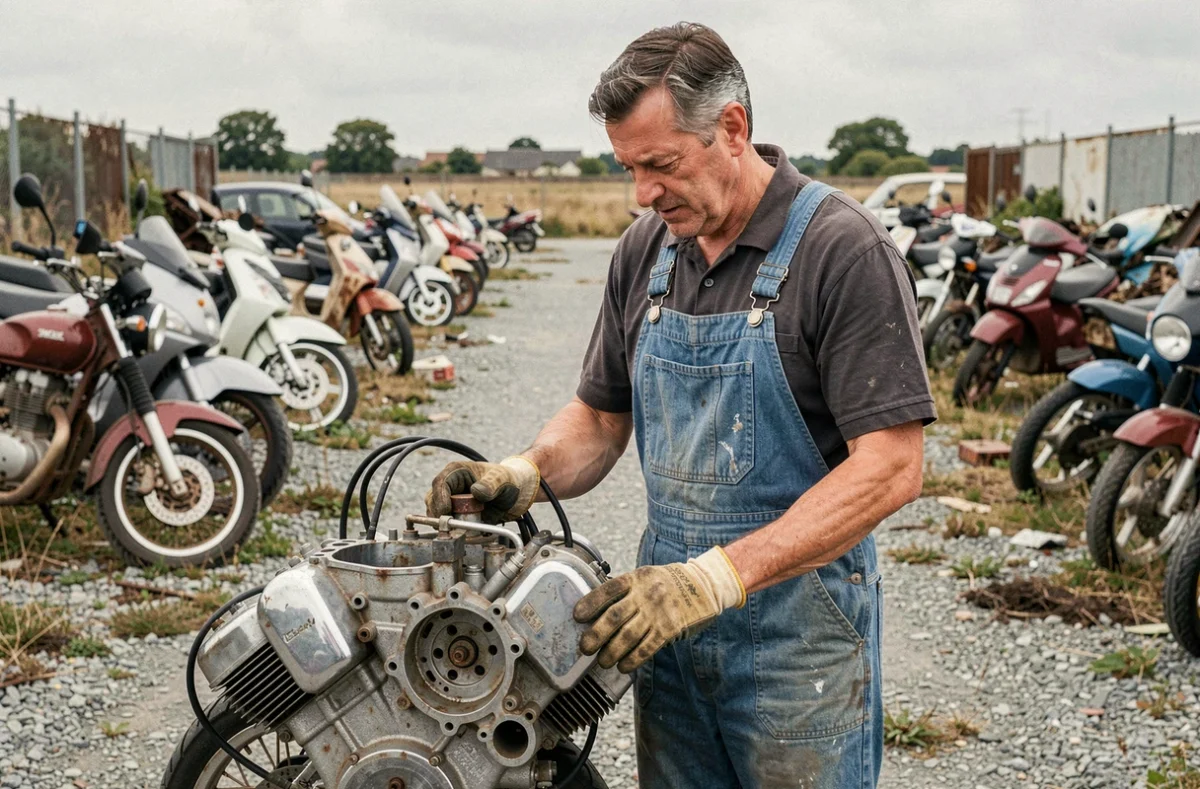
A motorcycle salvage yard, or end-of-life vehicle (VHU) center, collects damaged, end-of-life, or seized two-wheelers, then dismantles and sells the still functional parts. In France, these facilities allow you to acquire used parts at a fraction of the price of new ones, provided you know exactly what to look for and how to verify what you’re buying.
Manufacturer reference and model year: the technical prerequisite
The main mistake in a motorcycle salvage yard is to ask for “a carburetor for Honda CBR 600.” The same model can change its engine, wiring harness, or mounts depending on the year and version (F, RR, Sport). Without the exact manufacturer reference, the risk of incompatibility is real.
The OEM (Original Equipment Manufacturer) number is found on the part itself or in the manufacturer’s technical catalog. This multi-digit number precisely identifies a component, regardless of the commercial name. Online catalogs from Japanese and European manufacturers are often freely accessible.
Before contacting a salvage yard, prepare three elements: the exact model with its chassis code (visible on the registration document, section E), the year of first registration, and the OEM reference of the part. This preparation avoids back-and-forth and allows the salvage operator to quickly check their stock. To obtain more information on Nox Autos, which lists motorcycle salvage yards by department, this preliminary step remains the same.
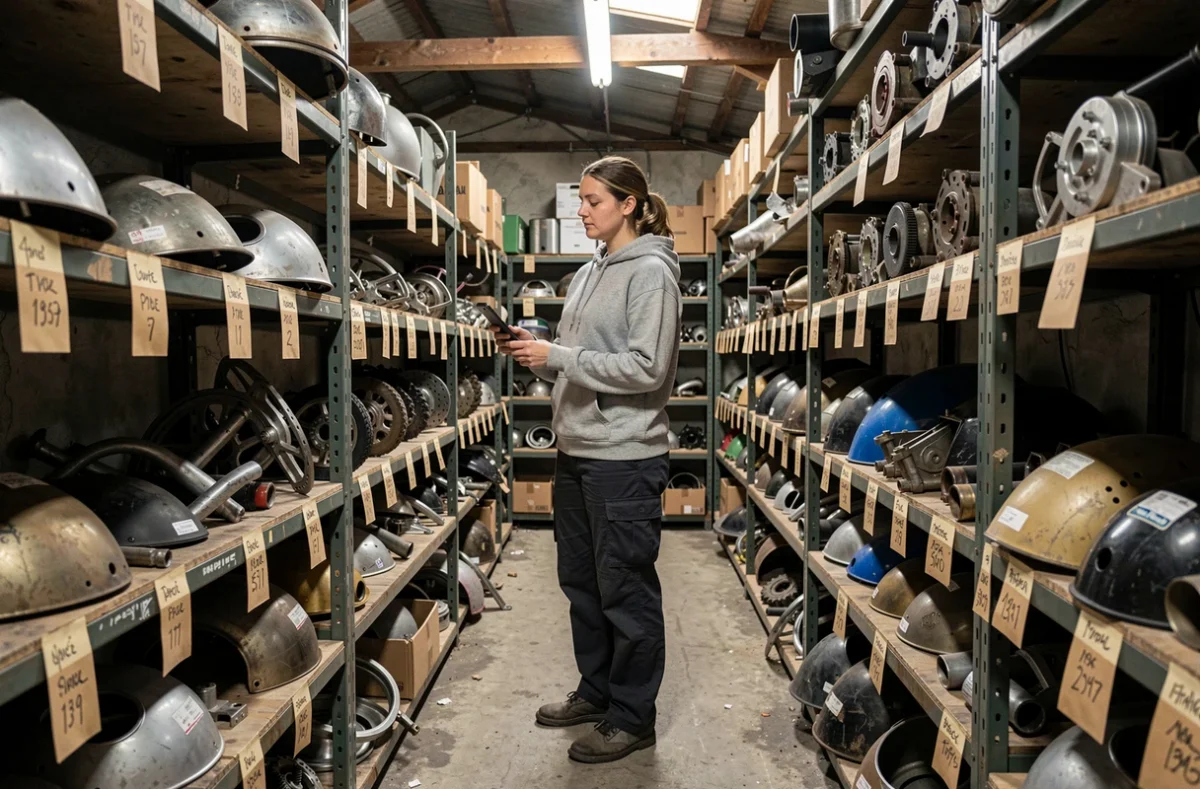
Eligible motorcycle parts for reuse: what the law allows and excludes
Since October 1, 2024, a professional repairer must offer the customer the option to choose certain parts from the circular economy for the repair of a two-wheeler. Decree No. 2024-824 of July 16, 2024, codified in Article R. 224-22 of the Consumer Code, regulates this obligation.
The categories concerned include removable bodywork, upholstery, optics, and certain mechanical or electronic parts. Brake linings, wheel axles, and structural elements of the chassis are excluded from reuse. The text also provides exceptions when the used part is not available within a timeframe compatible with the immobilization of the vehicle.
In practice, this regulation expands the market for salvage parts for motorcyclists. A fairing, a tank, a rear light, or a used speedometer acquired from a VHU center now falls within an explicit legal framework. The repairer can procure and offer them to the customer, which was not systematic before.
Legal warranty on a used motorcycle part purchased from a salvage yard
Buying from a professional (approved VHU center, registered salvage operator) rather than from an individual on a forum changes the game in terms of protection. The legal warranty of conformity applies to used parts sold by a professional to a consumer.
The professional seller is responsible for conformity defects for a period that can extend up to two years after delivery. For a used item, the presumption that the defect already existed at the time of delivery applies during the first months. If the used engine purchased from a salvage yard has an undisclosed defect, the professional must be accountable.
An individual reselling a part on a classifieds platform is only subject to the warranty for hidden defects, which is more difficult to enforce. The difference in recourse often justifies the price gap between an approved salvage yard and a private sale.
Checks to make before accepting a part
- Visually check for the absence of cracks, deep corrosion, and signs of overheating (bluish discoloration on engine parts)
- Ask about the origin of the donor vehicle: a two-wheeler that was front-end damaged likely spared the rear parts, and vice versa
- Verify that the OEM number engraved or affixed to the part matches the sought reference
- Ensure that the salvage yard provides an invoice stating the exact designation, reference, and condition of the part
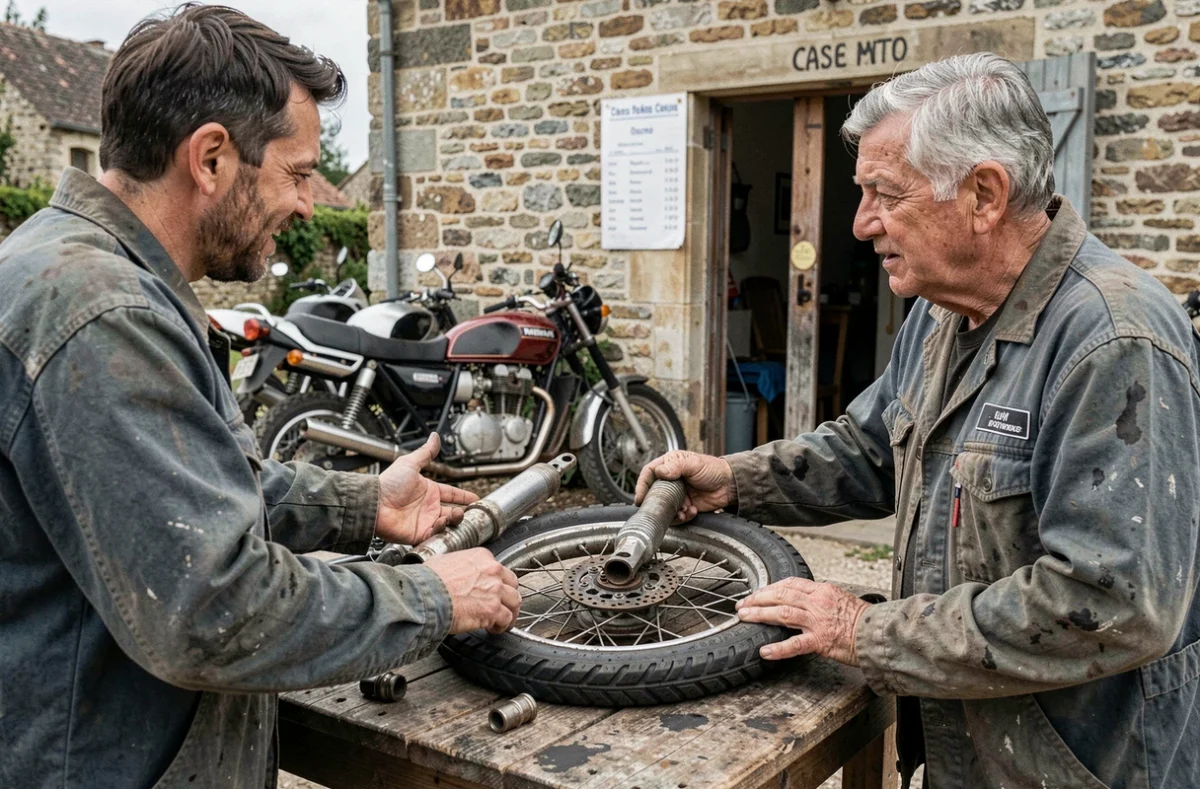
Search strategy: multiply channels without wasting time
Salvage networks operate through multi-site requests: a query sent to a network is relayed to several affiliated VHU centers, which respond if they have the part. This mechanism works well for common models (Yamaha scooters, Suzuki GSX, Kawasaki Z), but less so for niche bikes or older models.
Cross-referencing at least three different sources allows for price and condition comparisons. An online salvage network, a local salvage yard visited in person, and a brand-specific group form an effective base.
A physical visit retains an advantage that digital cannot replace: touching the part, checking its play, observing actual wear. For an engine, wiring harness, or fork/steering stem assembly, traveling remains the safest way to assess what you’re buying.
What can be easily found in a motorcycle salvage yard
- Fairings, fenders, tanks, and body elements (abundant stock, falls often involve these parts)
- Optics, turn signals, mirrors, and speedometers (parts frequently stocked because they are easy to dismantle)
- Brake calipers, master cylinders, and levers (provided to check for the absence of seizing)
- Aluminum rims, swingarms, and footpegs (available on widespread models)
Internal engine parts (crankshafts, pistons, valves) are rarer individually. Salvage yards often resell the complete engine block, which can be advantageous if several components need replacing.
The market for salvage parts for motorcycles in France has been structured with regulations on reuse. A used part purchased from an approved VHU center offers a legal framework, traceability, and recourse that informal resale does not guarantee. The time spent preparing your search, reference in hand, is largely recovered on the final bill.